

The identity crisis
Writing as a biracial author

CW: racism
This topic is something that has plagued me since childhood—and something that bleeds into my writing more often than not.
I am mixed race. I am half-Chinese and half-English. And a lot of my writing features Chinese main characters, incorporates Chinese mythology, and is set in Asia or Asian-inspired worlds.
Am I enough? Am I allowed to be writing these stories?
Unnecessarily long Chezza lore
I struggled with these questions for a long time until I realized they didn’t stem from my writing. They burgeoned long ago, when I was a half-Chinese girl living in one of the most culturally homogenous villages in England.
The mixed-race identity crisis is a real thing, born from society’s obsession with defining others. Humans take a certain kind of comfort in their ability to understand others, but sometimes that means pre-emptively categorizing people—making assumptions about who they are based on visual cues.
Multiracial people feel this categorization, especially if they’re White presenting. And when categorization blends with casual racism, it becomes particularly galling. We live our lives barraged by comments such as “Well, I only said what I said because you don’t look Asian” and “I mean, you’re only half. You’re still White.” As if the ethnically marginalized half is saved by our other half’s proximity to Whiteness (/s). We live our lives with this fragmented sense of belonging.
As a child, I was more of a visible minority than I am now. And I couldn’t understand why the children who lived across the alley would spray paint my garage. It didn’t make sense to me why they’d wait until they could hear me playing in my garden, then throw rocks over the fence, cutting my arm and making me bleed. I didn’t know why my childminder’s daughter kept calling me “poo face” and commenting that I was different, and that my skin was brown (it wasn’t).
I was too young to comprehend what it meant to be different. And while I resented the curries and rice dishes my mum cooked, wanting chips and pies instead, I still relished the somboy mum bought me when we visited the singular Asian market in the next town over. I happily learned how to count to ten in Mandarin, and would sing “fatty fatty bom bom” in Malay with glee.
As I grew older and started looking more racially ambiguous, things changed. We moved to Canada, which is much more ethnically diverse than my childhood village in England. But instead of outright racism, I began experiencing “friend” groups that would make casual racist remarks about Asians. If one person pointed out my cultural heritage, the racist one would dismiss it because I didn’t look Asian enough to count. One person once told me it was wrong for people of different races to get married. To this day, I am still flabbergasted people are actually willing to say such things out loud, let alone hold these beliefs at their core.
It also didn’t help that on top of the multiracial fragmented sense of belonging, I was now a painfully shy immigrant exposed to a new country, new school, and new way of life, all while standing out from everyone else with a strong East Yorkshire accent (in case you’re wondering, that’s why the accent is gone now—I couldn’t bear the attention of other children).
In my experience, people don’t like when you refuse to fit in their neat little boxes. Even people I’ve known for a long time—if I mention something about Chinese culture, they scoff and say “You’re not Chinese.” In their minds, if I look more White, then they’re comfortable with me being White. And it makes them uncomfortable to try and see me in a different way, so they don’t.
All of this ties back to how difficult it can be to assert your identity when the people around you are claiming otherwise. This is true for much more than just multiracial people, and it pains me to see others struggling with it.
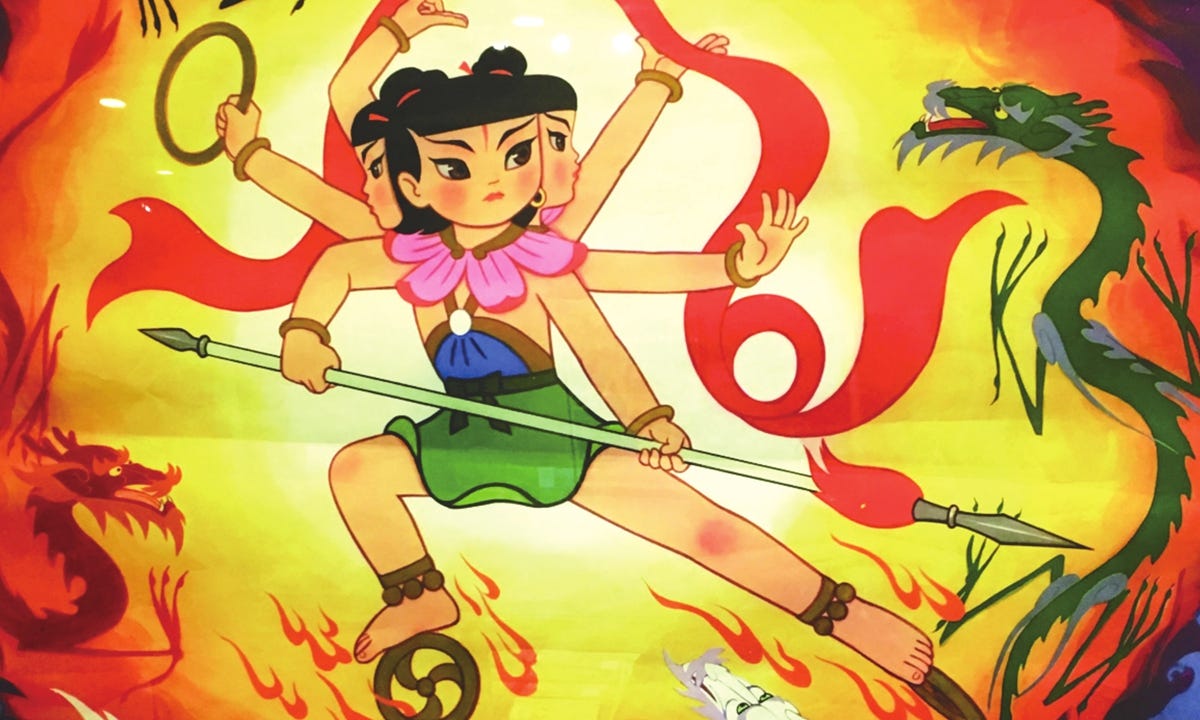
But I love the Chinese side of my heritage. It’s not something I’m willing to relinquish, especially not to appease others. I’m proud of it—it makes me who I am as a person. I grew up with the dichotomy of fish and chips and apology sliced fruits. I have a grandfather, and I had a gong gong. I delighted in watching Little Nezha Fights Great Dragon Kings in the horrible English dub. I was both, and I am both.
Self-indulgent life story aside—what does this have to do with writing?
I’ve always loved writing, especially fantasy, but nothing seemed to really stick. I never felt inspired enough to see a piece through to completion. But when I started writing stories based on the Chinese mythology I’ve always known and loved, I knew. This is where my passion lies.
But the lingering doubts plagued me for a long time. Did I belong in this culture enough to write these stories? Sure, I was raised by a Chinese mum, I’d spent a whole summer studying at the University of Nanjing in China, we celebrate Lunar New Year each year, and I have an absolutely massive Chinese family here in Canada—I immerse myself in my Chinese heritage and have done so for years—but the mixed-race identity crisis will always have us questioning whether it’s enough.
And not long after I joined the writing community on social media, some yellowface incidents happened. An author was exposed for pretending to be Asian to capitalize on agents looking for marginalized/BIPOC authors.
And—that isn’t me. Mixed race authors, that isn’t us. But personally, it sure as hell made me question myself. Again. Pretending to be a marginalized race just to get ahead in the publishing industry is reprehensible. I’m not pretending, but I’m half—will people laugh at me? Tell me I don’t belong in these spaces? Claim I have no right to be telling these stories?
Publishing is tough for BIPOC authors, especially ones who are telling stories rooted in culture. Pretending to be marginalized for a perceived advantage is incredibly damaging. It encroaches on the actual marginalized authors trying to have their voices heard. A privileged voice muffling a marginalized one is everything so many of us are trying to fight against. And, to a lesser extent, it makes those of us in the liminal space—the mixed race authors—incredibly uncomfortable, left to question where it is we ultimately belong.
What I’ve discovered over the years is that it’s important to have these doubts. It’s important to question our identity, because it makes us more attentive to the cultures we’re portraying in our stories. And this is true for every writer, no matter the background or upbringing. Are you conveying an authentic representation? Is the way you write these cultures an equal mix of respect and personal experience?
What does this kind of writing entail? (For me, at least)
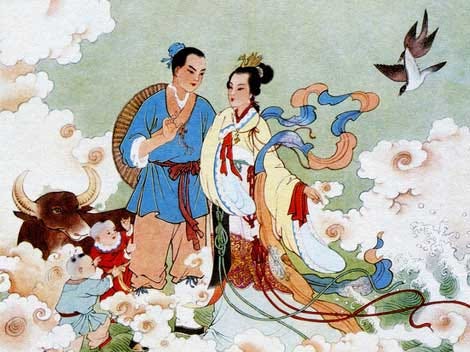
The book with which I signed with my agent is a retelling of 牛郎织女/The Legend of the Cowherd and the Weaver Girl. But I didn’t go into writing it with just an impression of the myth in my mind. My research included:
Song and Han Dynasty histories, especially clothing, cultural norms, socioeconomic factors, and food.
Poems from the Shijing.
Returning to classics such as Investiture of the Gods, Classic of Mountains and Seas, and Journey to the West. (I don’t reference all of these in the book, but they’re important for the genre I write in.)
Finding academic research on the myth, including “Of Marriage, Labor and the Small Peasant Family: A Morphological and Feminist Study of the Cowherd and Weaving Maid Folktales.” (Shoutout to Professor Eric Yu Kwan-wai from The Education University of Hong Kong for emailing me the PDF when I couldn’t find it online!)
Diyu lore (literally the best). Also, the representation of Diyu in Journey to the West.
Xianxia cdramas. So, so many cdramas. (Ok, I watch these regardless, but they do heavily inspire my storytelling!)
I have pages and pages of notes from wanting to be as historically accurate as possible, though of course I do take liberties on the fantasy side of things. This is such a well-loved myth and even though I put my own spin on it, I wanted to do it justice. Especially when tackling representations of a culture that constitutes half of my being.
Final thoughts
Everyone’s writing process will be different. This article is not intended to be prescriptive; rather, it’s a culmination of the thoughts and fears and determination that have been warring inside me for years, and that are now more frequently on display in the words and cultures I write.
I’m fully aware that I am half-POC. I have lived through enough discrimination for it to affect my outlook, but I know that what I’ve experienced is only a fraction of what many go through on a daily basis. I recognize my privilege and am willing to do what I can to extend my support to others. This is also why I’m very open about being biracial.
I am half-Chinese. I am half-English. Therefore, I am Chinese AND I am English. I read and promote books by BIPOC authors because they’re beautiful. But I am also actively invested in supporting BIPOC and marginalized authors because I desperately want those voices to be heard.
So, biracial authors—are you enough? I think if you are being authentic to yourself and your experiences, if you’re approaching these stories from a place of love and respect, then you are. Being biracial or multiracial gives us a unique view of the world, and we shouldn’t discount it based on how others insist on seeing us.
There will always be others who try to define you. You don’t have to let them.
Further reading and resources
I recently found the Mixed Asian Media website, and there are some lovely articles and interviews that highlight the growing prevalence of mixed-race culture.
The Mixed Messages substack!
The Racism of People Who Love You: Essays on Mixed Race Belonging by Samira Mehta
[Shameless self plug] My short story, “White Crane and Red Fox” deals with fractured mixed-race identities from a fantasy lens inspired by Chinese mythology, and can be read in Heartlines Spec issue 7!
This is so relatable, even as a diasporic Asian who grew up in New Zealand - while some white kids called me a yellow monkey, there were also Asians who considered me a traitor for having white friends. It feels like people expect you to be one or the other, and it’s not good enough to embrace both. I’m also worried everyday that the Tang-inspired stories I’m working on will be too Asian for white readers and criticised by Asian readers for being too westernised 🥲
As someone who’s familiar with the tale of 牛郎織女 I can’t wait to read your retelling of it! 😍
Awesome❤️